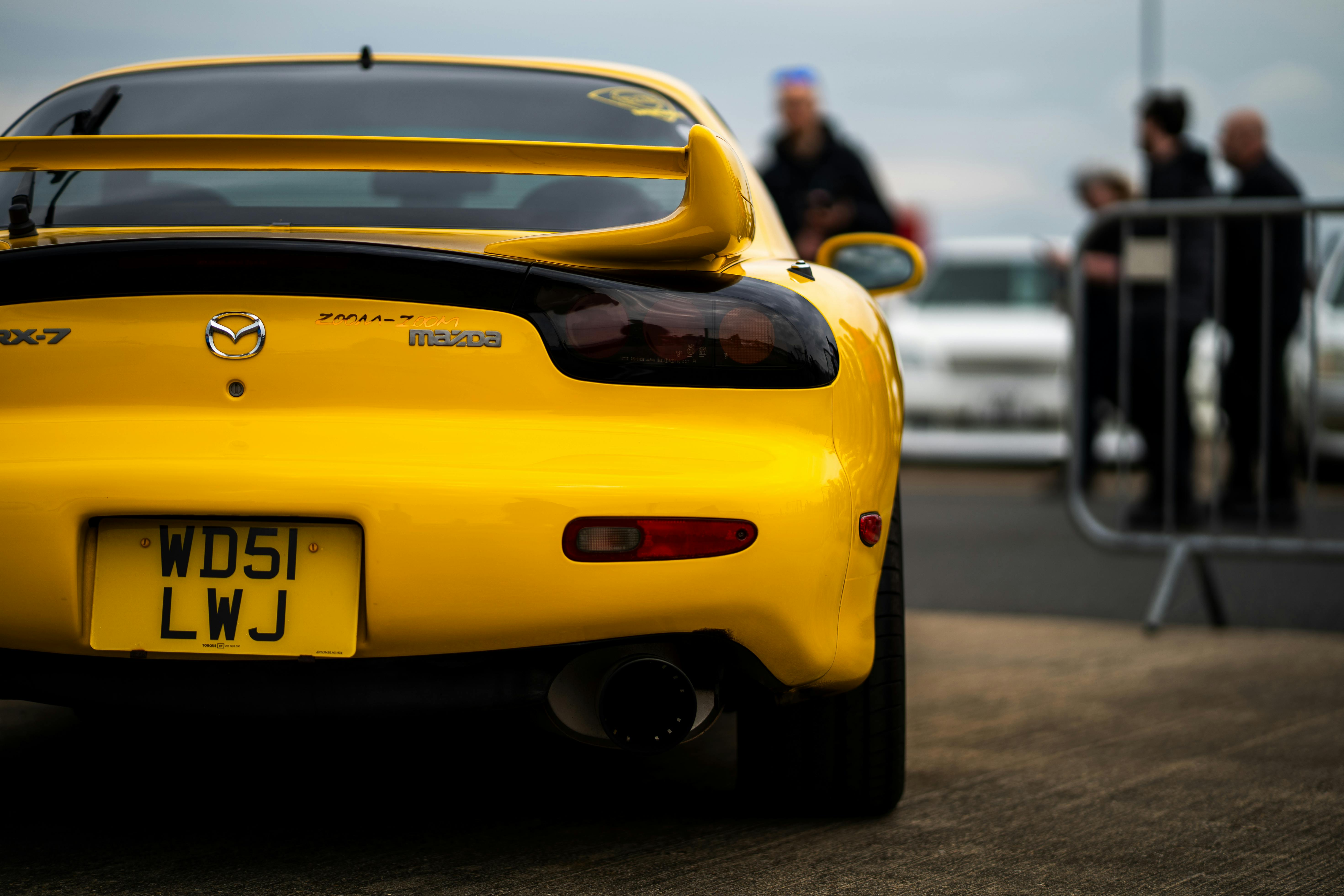
From West Coast canyon runs to East Coast meets, RX‑7s thrived in import culture. Swaps, bridge ports, and big singles turned rotary curiosity into legend — with track days pushing reliability mods as much as power.
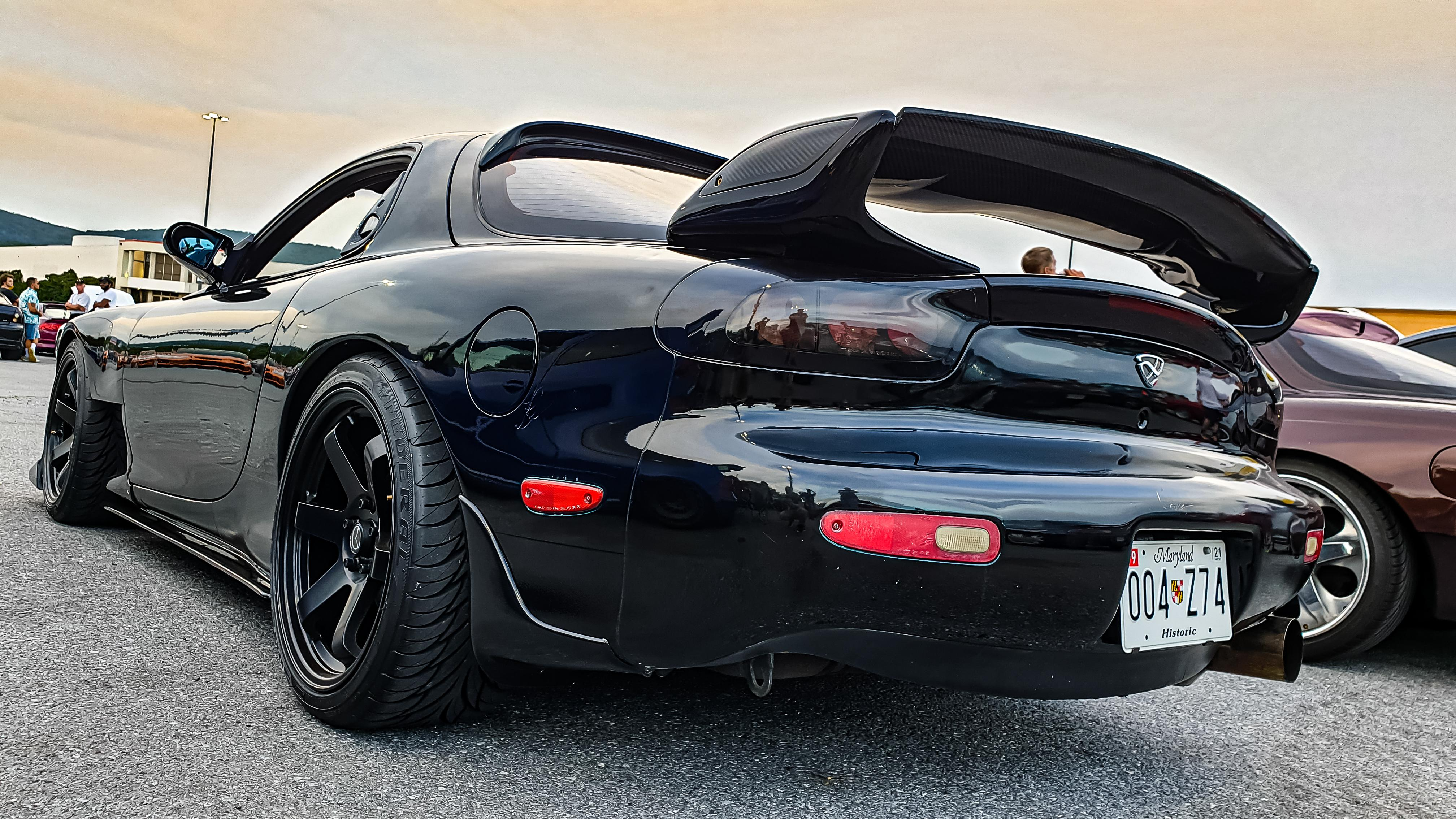
Rotary soul, nightly roads — the same heartbeat as the 787B, tuned for the city.
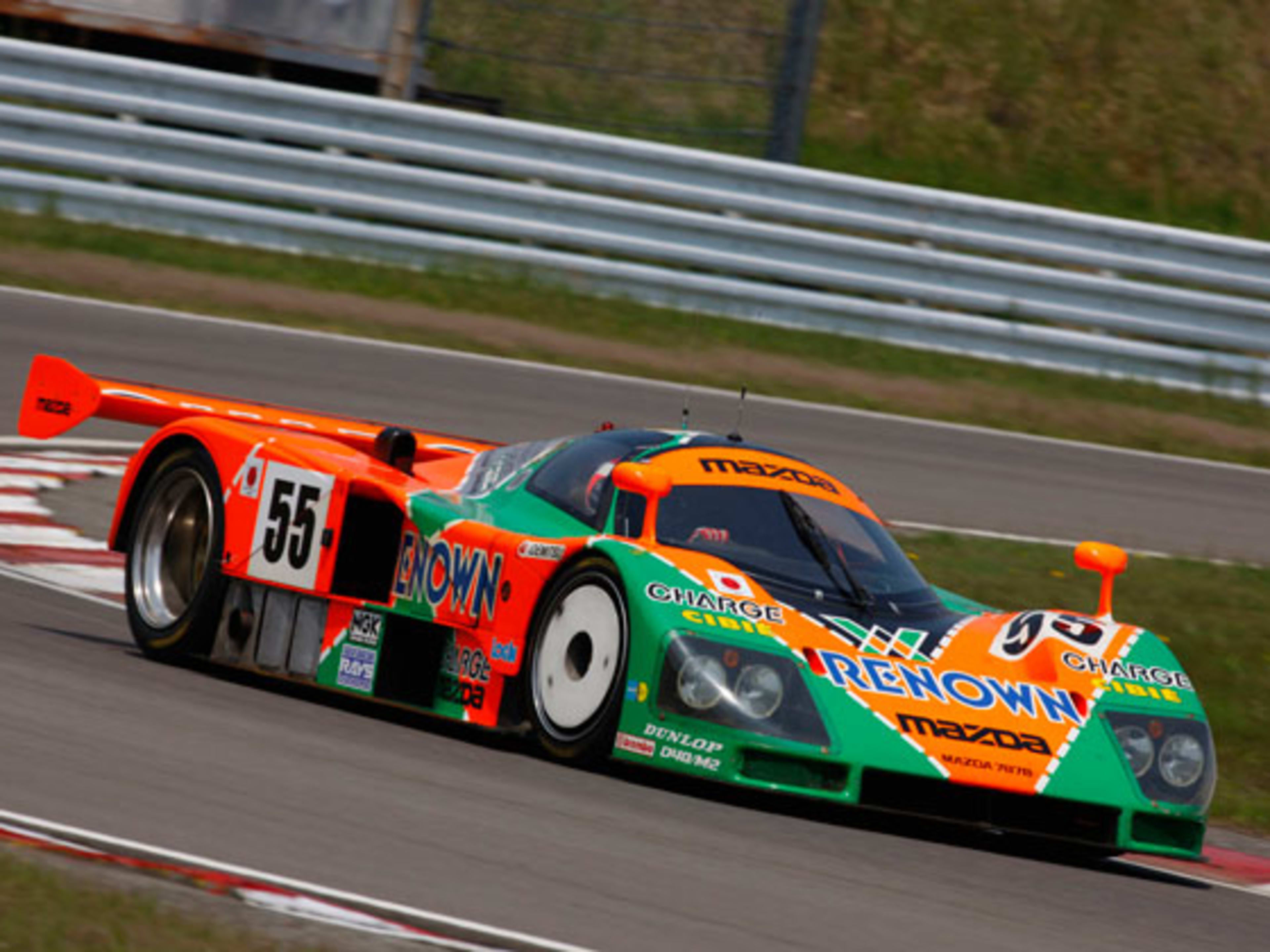
The Mazda RX‑7 put the rotary engine on everyday roads. Where the 787B proved endurance at Le Mans with a four‑rotor R26B, the RX‑7 distilled that idea into a lighter, more attainable package. The result was a street car with a voice unlike any piston engine — a rising, glassy note that made late‑night tunnels feel like grandstands.
Across generations — SA/FB, FC, and FD — the RX‑7 kept refining the formula: low weight, front‑mid engine layout, and steering that talks back. Tuners embraced the platform because the rotary loves air and rpm, and the chassis loves power used with finesse.
In Japan, the RX‑7 became a fixture of touge culture — narrow mountain passes where rhythm matters more than raw power. Drivers chased clean lines and weight transfer, learning to dance the car through linked corners. Down on the Shuto expressways and at Daikoku PA, late‑night meets mixed respect with rivalry, and the rotary’s siren song carried over Tokyo Bay.

From West Coast canyon runs to East Coast meets, RX‑7s thrived in import culture. Swaps, bridge ports, and big singles turned rotary curiosity into legend — with track days pushing reliability mods as much as power.

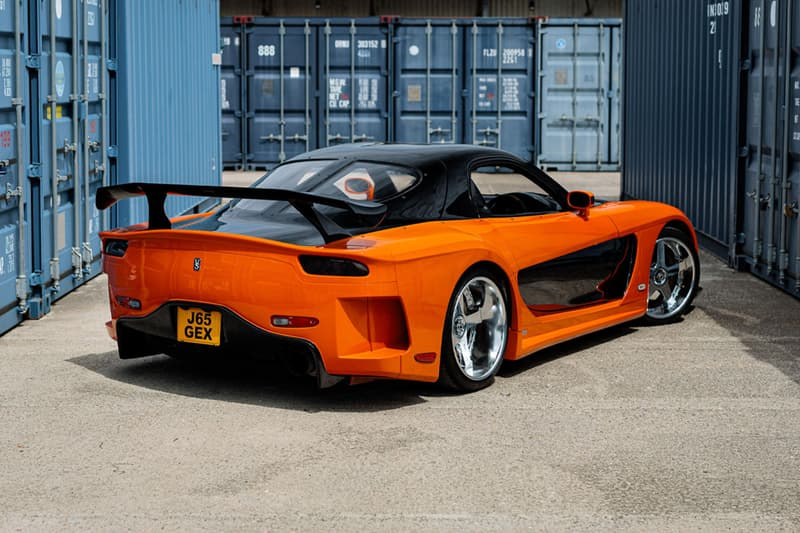
On tight B‑roads and Nürburgring days, balance mattered. Lightweight wheels, precise alignment, and cooling upgrades let the RX‑7 play to its strengths — speed carried, not forced.

A thriving rotary scene embraced drag, drift, and time attack. Communities traded knowledge the way racers trade slipstreams — keeping rotaries spinning worldwide.